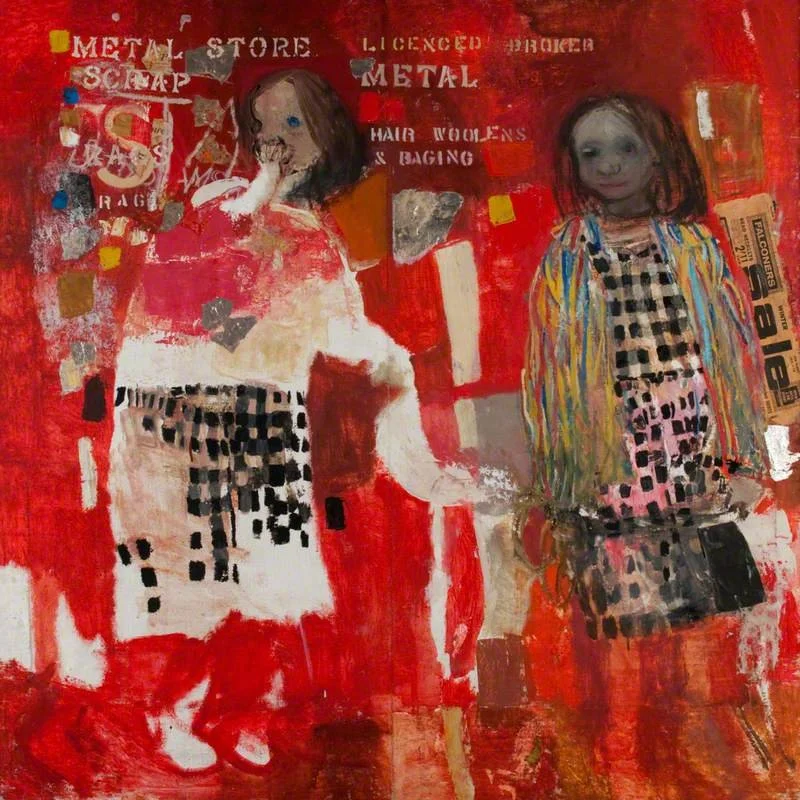
The Persistence of Unfinished Selves
There are some paintings that do not enter your life as encounters, but as recurrences. I do not remember first seeing Joan Eardley’s Two Children at Kelvingrove because, in some strange way, I feel as though I have always known it. The work exists in my memory less as a discrete object than as an atmospheric condition of the museum itself: red, towering, watchful.
Returning to Glasgow recently, I realised that the painting does not merely remind me of childhood. It produces the sensation of childhood as something still partially alive, still moving somewhere alongside me. Other people often find the children unsettling - haunted, even. But haunting is not always frightening. Sometimes it is the feeling of becoming briefly doubled with earlier versions of yourself.
This essay explores queer hauntology, memory, and the strange temporal life of museums through a return to one painting that has followed me, quietly and persistently, across decades.
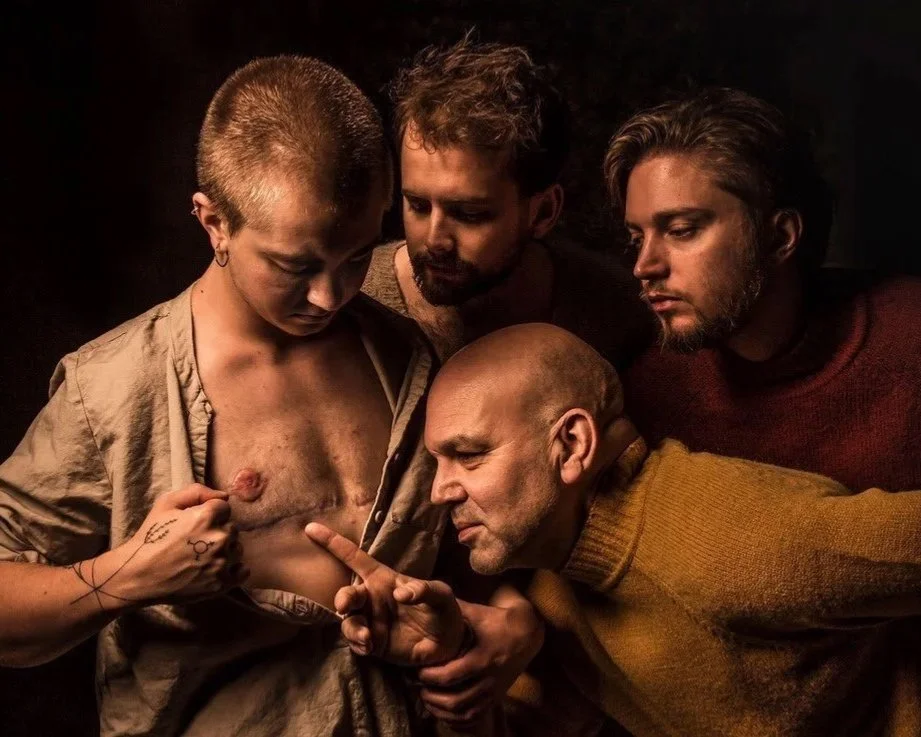
The Scar Does Not Resolve the Wound
What happens when the wound no longer needs to be proved?
Revisiting Caravaggio’s The Incredulity of Saint Thomas through Elisabeth Ohlson Wallin’s ID:TRANS (2017), the wound of Christ is transformed into the scars of transition - marks that refuse the demand for verification and instead insist on recognition. Where Caravaggio stages belief as something secured through the probing of flesh, Ohlson Wallin reorients the encounter toward the lived realities of trans embodiment, in which the body is not an object of doubt but a site of self-determined presence.
The scar emerges here as both material and temporal: a form that disrupts linear time and resists the structures through which bodies are made legible. It carries within it a durational sense of becoming, binding together past and present without resolving either. In doing so, it unsettles not only the epistemological framework of the early modern image, but also the contemporary conditions under which trans and queer bodies are seen, recognised, and understood.
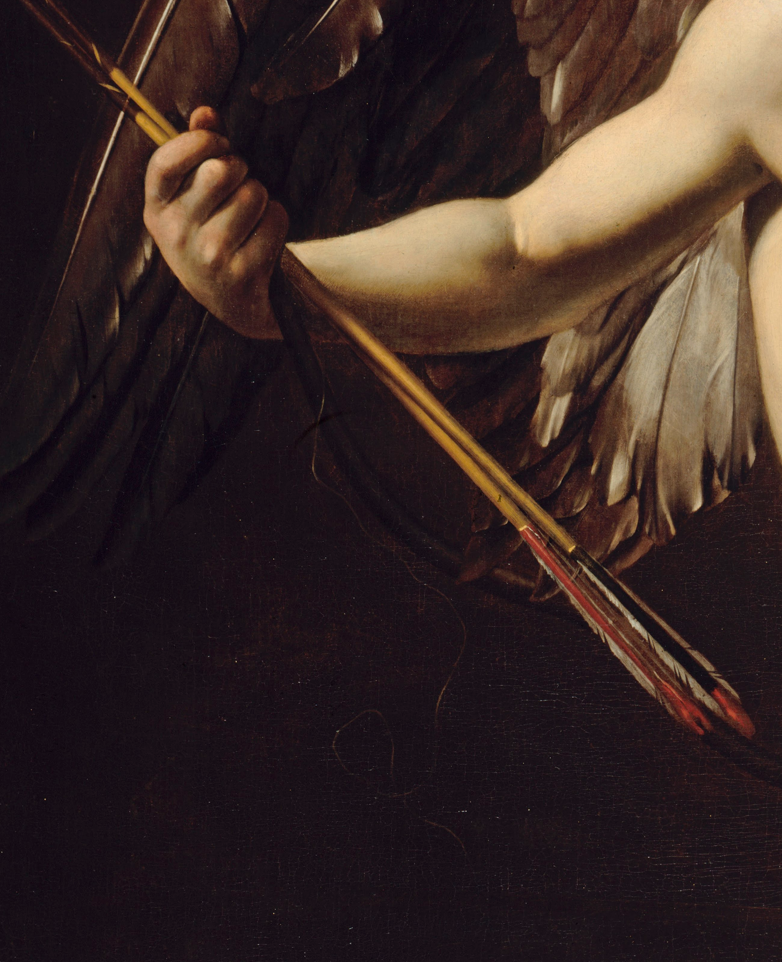
This Thin, Drifting Memory
I wasn’t really meant to be there. I’d slipped into a private, teacher-focused viewing at the Wallace Collection - an event built around a single painting, Caravaggio’s Victorious Cupid, framed as an opportunity to see what the collection might offer the classroom. I was there to support my partner. There was wine, low lighting, and a curator explaining exactly how to approach it. He kept softening the work into something manageable - jokes, scandal, the familiar language of “problems” and “controversy” - as if it needed to be made palatable in order to be taught.
I didn’t try to follow. That’s my own arrogance, I think - but also my refusal. The insistence on containing the painting, on making it behave, irritated me.
Instead, my attention fixed elsewhere. On a small detail: a loose strand hanging from Cupid’s broken bow. It was almost nothing, easy to miss, but it refused to stay incidental. The longer I looked, the less it resembled string and the more it felt like something internal - a thin filament, like a trace of memory seen from inside the body.
The writing begins there.
The bow had already done its work; whatever had been fired was gone. And yet this strand remained, as if holding the force of that action in place. It began to feel less like a detail and more like a form of material memory - something lodged at the site of tension, refusing to resolve or disappear.
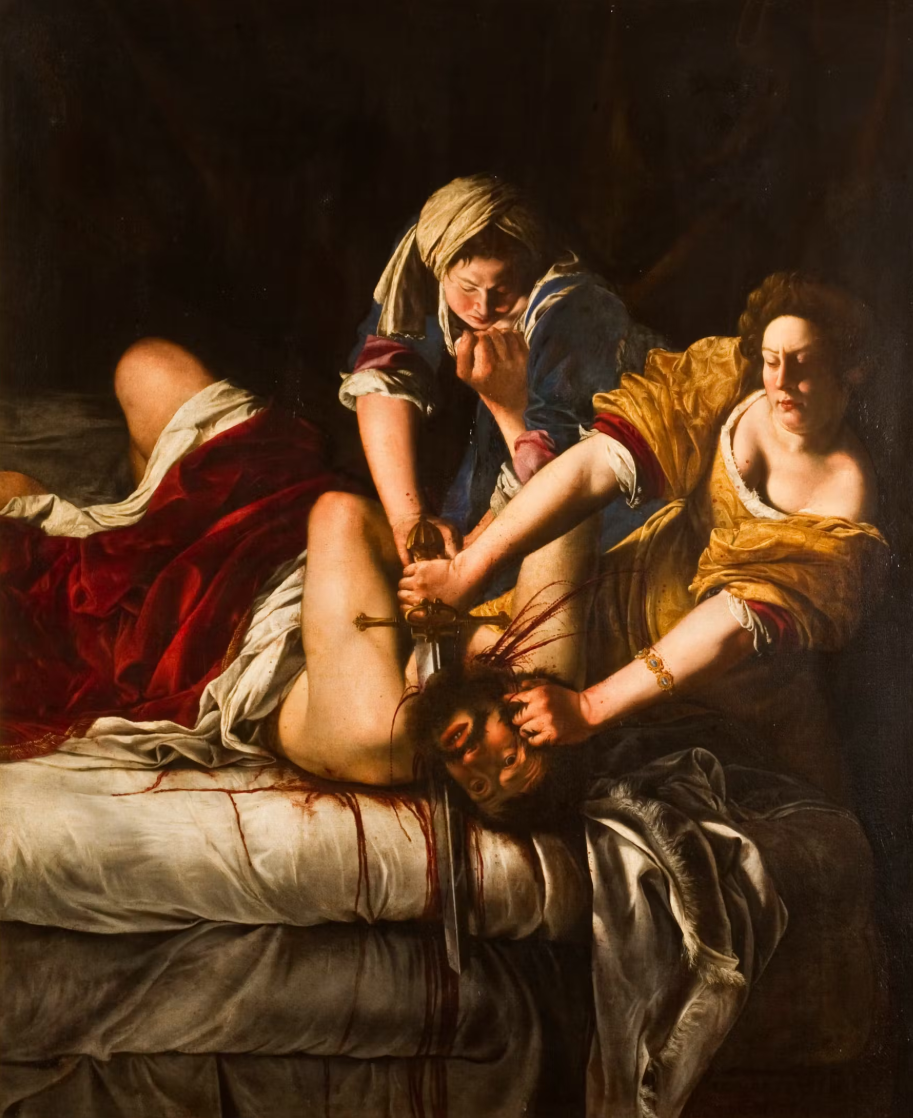
The Time of Red: A Mediation on Artemisia Gentileschi’s ‘Judith Beheading Holofernes’
It begins with red.
Not the story, not the blade, but the red that reaches outward before the mind has time to name it. For a moment the painting feels less like an image than an encounter - colour moving through time, touching the viewer across centuries. Artemisia does not simply depict an act; she suspends us within it. The question is not what the painting means, but what happens when we allow ourselves to remain inside its red.
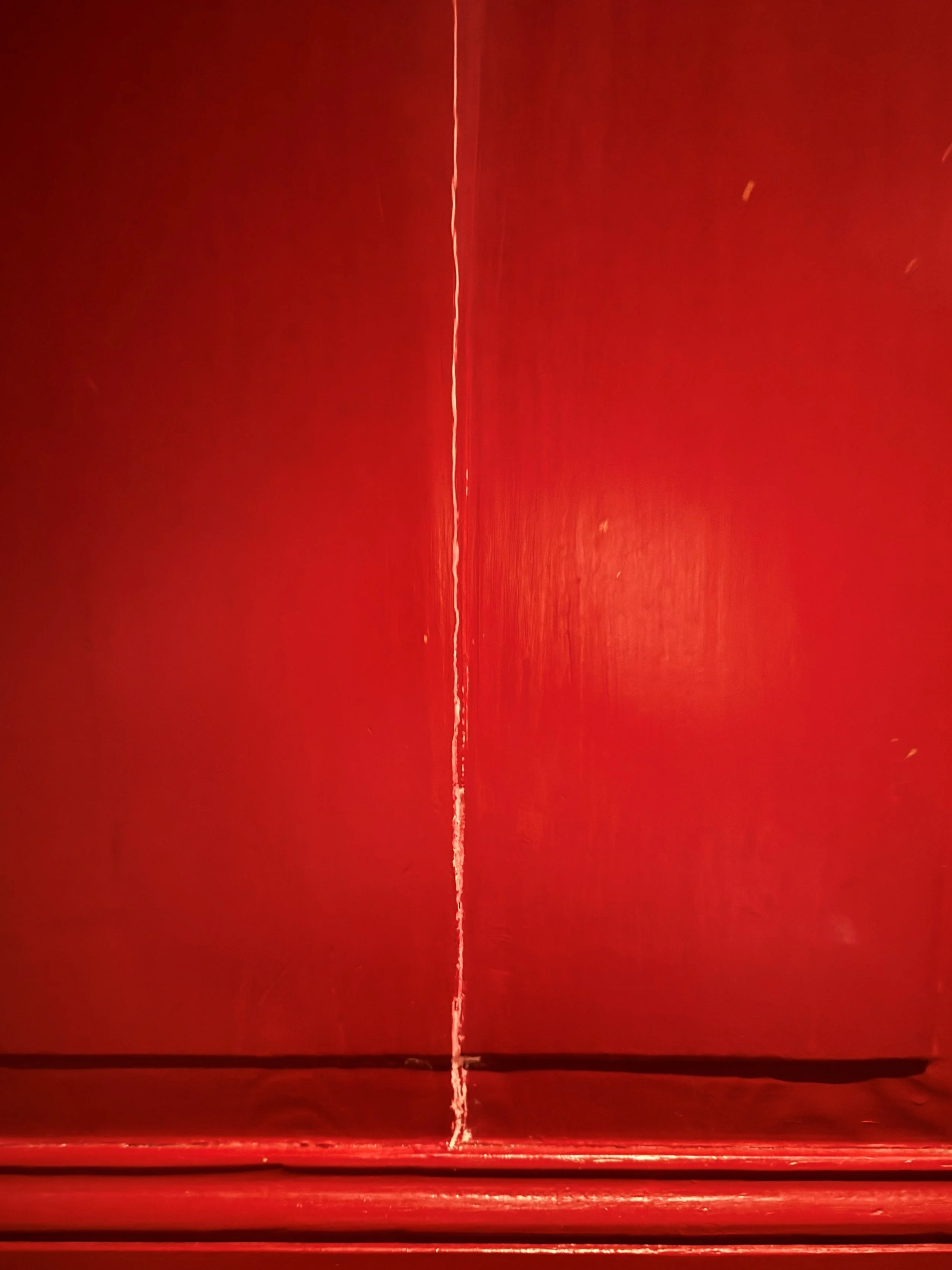
On Red, Mould, and the Collapse of Time
In a restaurant toilet in Victoria, London, I found myself unexpectedly returned to Barnett Newman’s Onement I - not in a museum, but on the glossy back of a red bathroom door. What began as an ordinary, slightly damp pause in the evening turned into a strange collapse of time, where high modernism met black mould and plumbing. This post is about that moment: about colour, memory, and the unsettling possibility that the sublime can ambush you anywhere - even while you’re waiting to wash your hands.
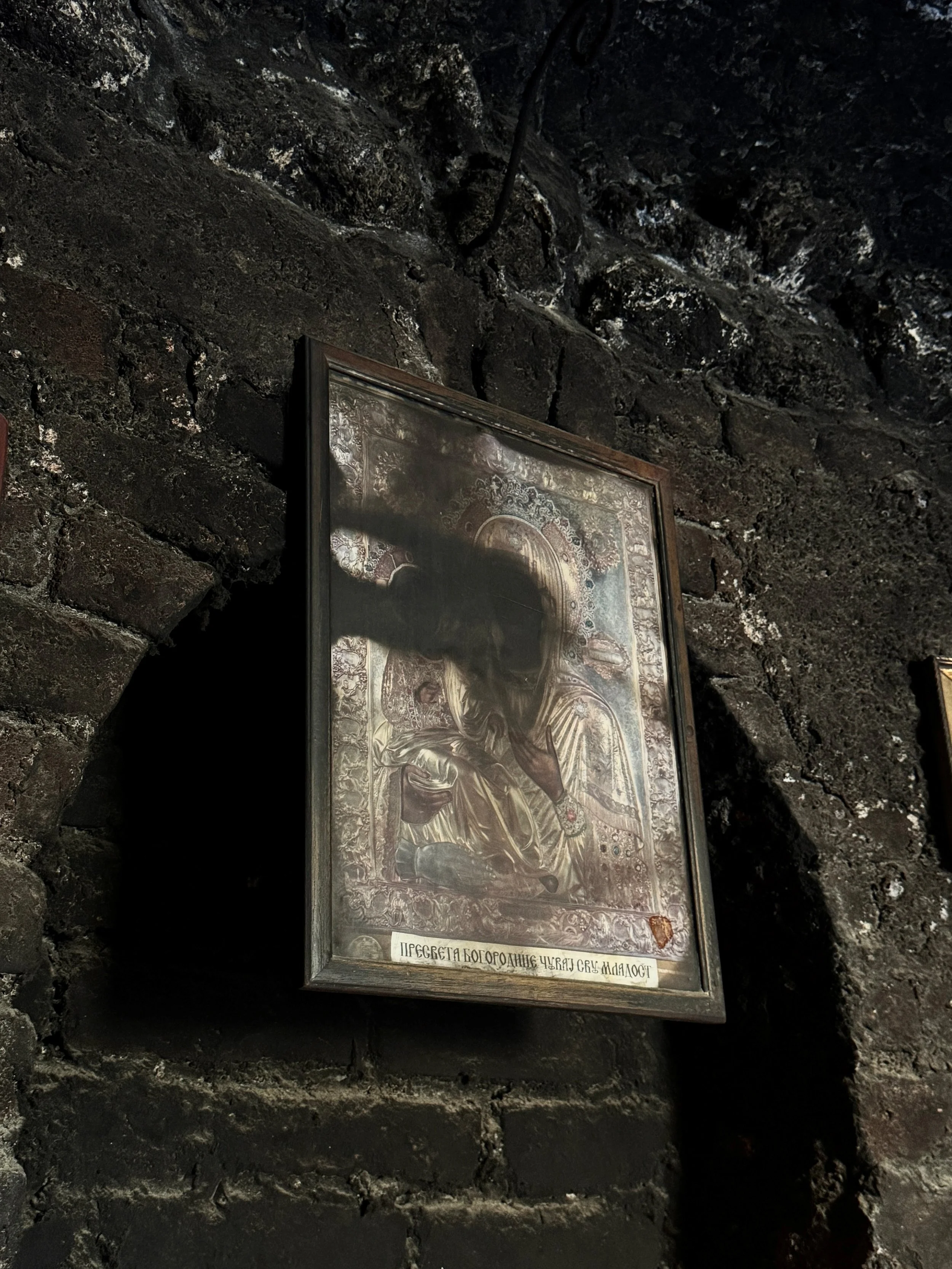
The Burning Chapel
The chapel was burning, burning from the inside out. The faces of these saints - once shrouded in gold and precious adornment - had been stripped to soot and void, the one feature that tied saint to human slowly undone. And yet they were not burned through anger or violence, but through prayer: candles lit beneath whoever we hope them to be, each small flame still struggling to reflect the salvation they are meant to bring.
What remains is not simply damage but residue - a surface where devotion presses visibly against the image. In the half-light of the alcove, the burning chapel begins to ask something quieter and more unsettling: what happens when belief falters, but the ritual continues?