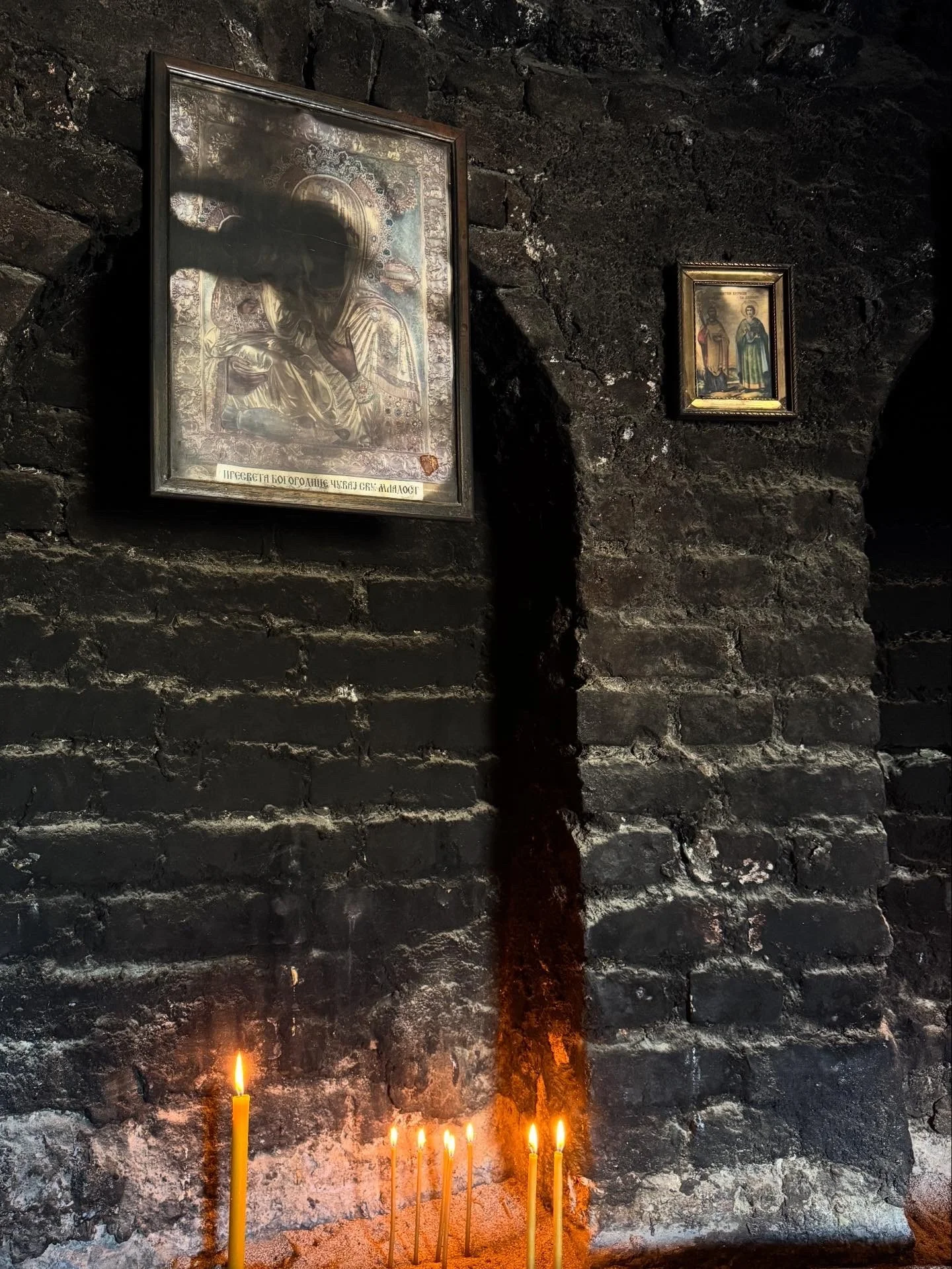
The Burning Chapel
Belgrade, February 2026
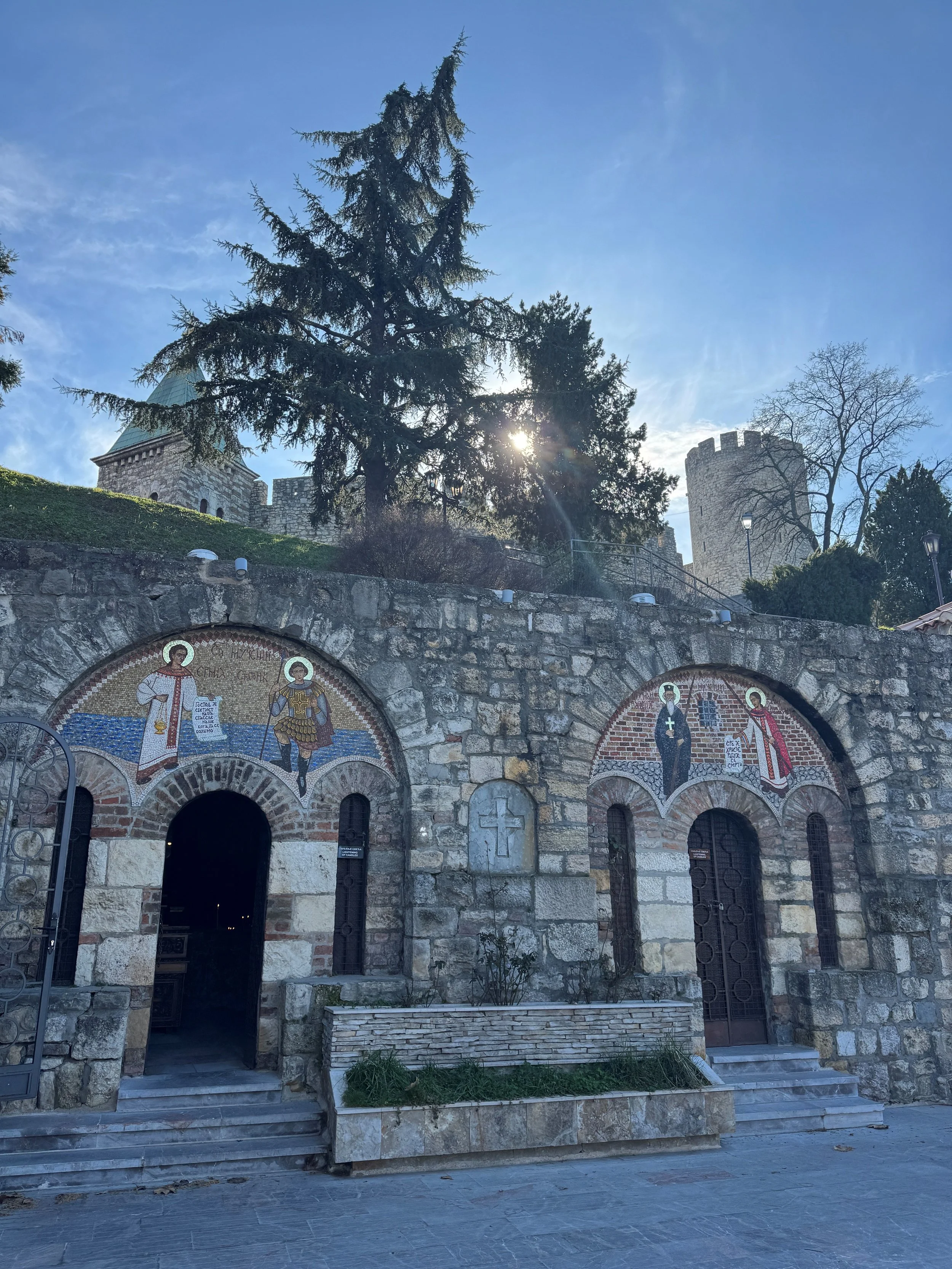
Outside of the candle alcoves of the Chapel of Saint Petka, Belgrade
I am used to seeing saintly figures shrouded in adornment - lavish golds and precious gems, as befits the Son of God and those who followed in his path.
But the chapel was burning, burning from the inside out. The faces of these heroes were stripped to soot and void, the one emblem of their humanity - the feature that tied saint to human - gone.
And yet they were not burned through anger or violence. They were burned through prayer: candles lit beneath whoever we hope them to be, each small flame still struggling to reflect the salvation they are meant to bring.
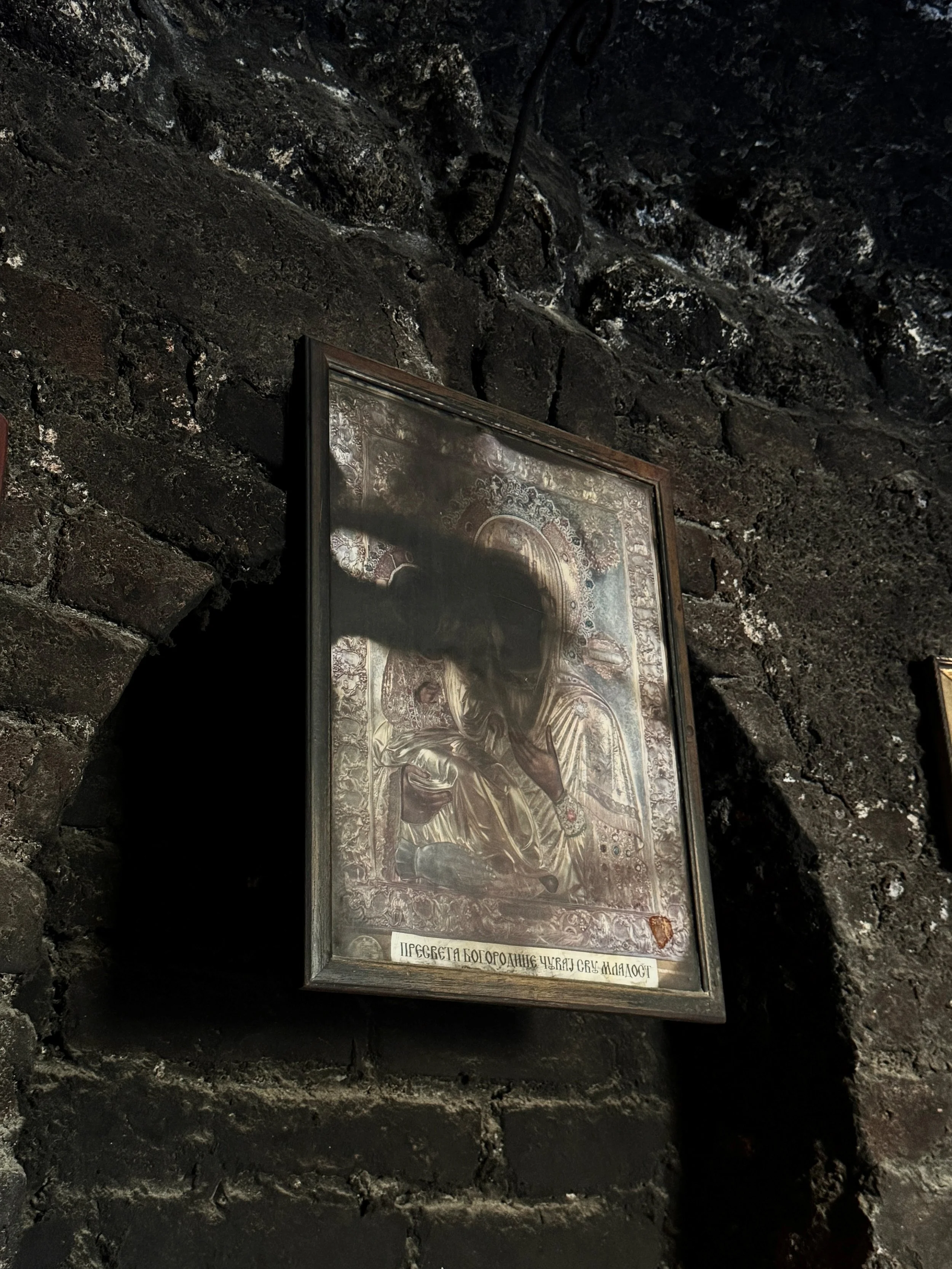
The ritual seems to have lost its connection, yet it continues, almost instinctively, as though the body remembers what belief no longer holds. Mother and Child become indistinguishable when touched by the aftermath of flame, its afterimage physical, residual, and present. I can almost feel the texture of the layered surfaces, their affect pressing against my own skin and memory.
Still, it feels like desperation - a reflection in the fire of something forgotten. Do we know who we are praying to anymore? Do we know what we are praying for? In a world where everything demands our compassion and our hope, we burn the very gods who were meant to guide us.
I cannot tell you what I believe in anymore, and that collective uncertainty spreads like darkness. Built on land shaped by the Celts, torn by the Romans, and remade and remade and remade, footstep after footstep, such confusion almost feels inevitable.
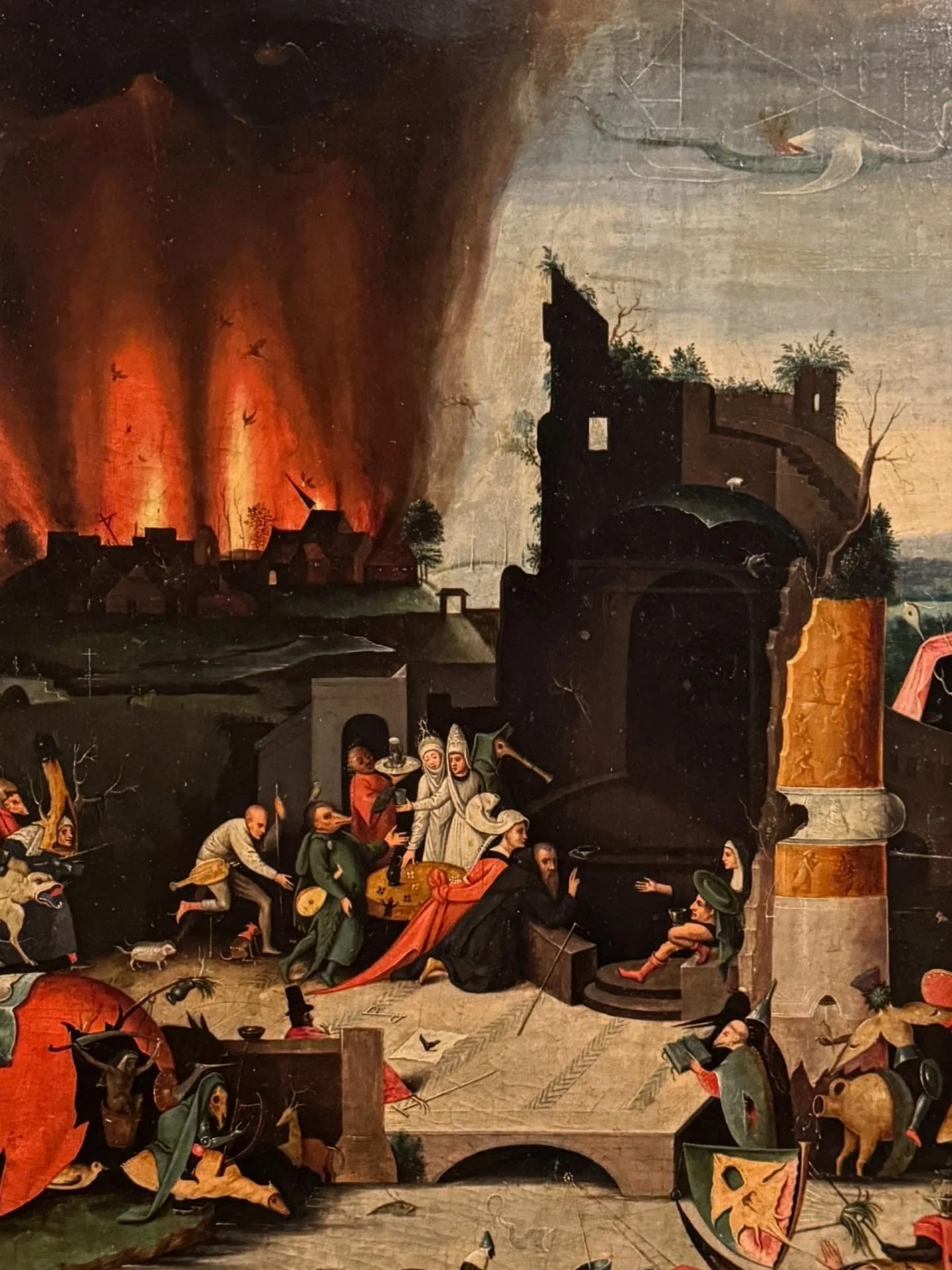
Hieronymus Bosch, The Temptation of Saint Anthony, 16th Century, Tempera on wood panel
Why am I in a chapel, lighting candles beneath faceless gods? Perhaps because I no longer understand where to turn, only how to hope - desperately - that the void might change shape, that this burning chapel might somehow remember me.
The air smells sweet. An incense of purity surrounded by the image of chaos. Outside, the gold and the stone still glitter, still presenting what we pretend to be, what we want to be.
But the truth remains inside. The burning slowly traces the lines of the stones and the walls, and soon it will no longer remain contained. It will show itself.
And yet, the burning should not be understood as destruction, but as reflection - a call to the hollowed spaces within us, the silent places we pray into in the hope of change. In its quiet way, the burning chapel is asking us to persevere through the in-between - the mud, the grey, the uncertainty
- because somewhere within that unfinished space, answers may still emerge. If only we look at the burning walls.